

If you’ve been waking up unable to reach behind your back, or you wince every time you try to put on a shirt, you already know how much a frozen shoulder can take over daily life. It creeps up slowly and then, almost overnight, stops you from doing the simplest things — brushing your hair, reaching for a shelf, even sleeping on one side. The good news is that frozen shoulder responds well to the right physiotherapy, and for many people in Karachi, getting that treatment at home turns out to be far more practical than driving across the city for repeated clinic visits.
At Dr. Aleem Physiotherapy Home Service, this is one of the conditions our team treats most often. This guide walks through what a frozen shoulder actually is, why it happens, and how home-based physiotherapy can help you get your shoulder moving again.
What Is Frozen Shoulder (Adhesive Capsulitis)?
Frozen shoulder, medically known as adhesive capsulitis, happens when the capsule of tissue surrounding the shoulder joint becomes thickened, inflamed, and tight. As it tightens, it restricts how far you can move your arm in almost every direction. Unlike a pulled muscle or a simple strain, frozen shoulder doesn’t usually settle within a few days. It tends to build gradually over weeks or months, which is part of why so many people brush off the early stiffness until the pain becomes hard to ignore.
The Mayo Clinic notes that frozen shoulder typically develops in three overlapping stages — freezing, frozen, and thawing — and that the whole process can last anywhere from one to three years if left untreated. Structured physiotherapy is one of the main ways to shorten that timeline and reduce pain along the way.
Common Causes and Risk Factors
Frozen shoulder doesn’t always have an obvious trigger, but a few patterns show up again and again in the patients we see in Karachi:
- Keeping the arm immobile for a long stretch after surgery, a fracture, or a stroke
- Diabetes, which significantly raises the risk of adhesive capsulitis
- Thyroid disorders and certain cardiovascular conditions
- Age and gender — it’s more common in people between 40 and 60, and slightly more common in women
- Prolonged desk work or poor posture that limits natural shoulder movement
Signs You Might Have Frozen Shoulder
The symptoms usually build up in a pattern rather than appearing all at once. Watch for:
- A dull, aching pain deep in the shoulder that worsens at night
- Growing difficulty lifting the arm overhead or reaching behind the back
- Stiffness that makes everyday tasks like getting dressed, driving, or reaching for a seatbelt genuinely hard
- A noticeable loss of range of motion even when someone else tries to move your arm for you

Why Home-Based Physiotherapy Works Well for Frozen Shoulder
Frozen shoulder recovery isn’t a one-time fix. It needs consistent, gentle, and progressive movement over several weeks — which is exactly where home physiotherapy has an advantage over occasional clinic visits.
Comfort and Consistency
Recovering in a familiar environment, without the stress of traffic or waiting rooms, makes it far easier to stay consistent with sessions. And with a condition like this, consistency matters more than intensity.
One-on-One, Undivided Attention
A home session means the physiotherapist is focused entirely on you for the full appointment, adjusting technique in real time based on how your shoulder responds that day — something that’s harder to replicate in a busy clinic schedule.
Real-Life Movement Practice
Because the therapist is working with you in your own home, exercises can be tailored to your actual daily movements — reaching into your own kitchen cabinets, getting dressed in your own room, sitting in your usual chair — which tends to translate into faster, more practical recovery.
The Three Stages of Frozen Shoulder Recovery
Physiotherapy is adjusted depending on which stage you’re in:
- Freezing stage: Pain is the dominant issue, and movement gradually decreases. Treatment here focuses on gentle pain relief and protecting the range you still have.
- Frozen stage: Pain may ease slightly, but stiffness is at its worst. This is where structured stretching and manual therapy do the most work.
- Thawing stage: Movement slowly returns. Physiotherapy shifts toward strengthening and restoring full function so the shoulder doesn’t stay guarded out of habit.
Physiotherapy Techniques Used at Home
Range-of-Motion Exercises
Controlled stretching exercises — such as pendulum swings, wall climbs, and cross-body stretches — are introduced at a pace that matches your current stage, gradually coaxing the joint capsule to loosen without triggering flare-ups.
Manual Therapy
Hands-on joint mobilization and soft tissue release help reduce stiffness around the capsule and improve blood flow to the area, which supports healing.
Heat Therapy and Cupping (Hijama) Support
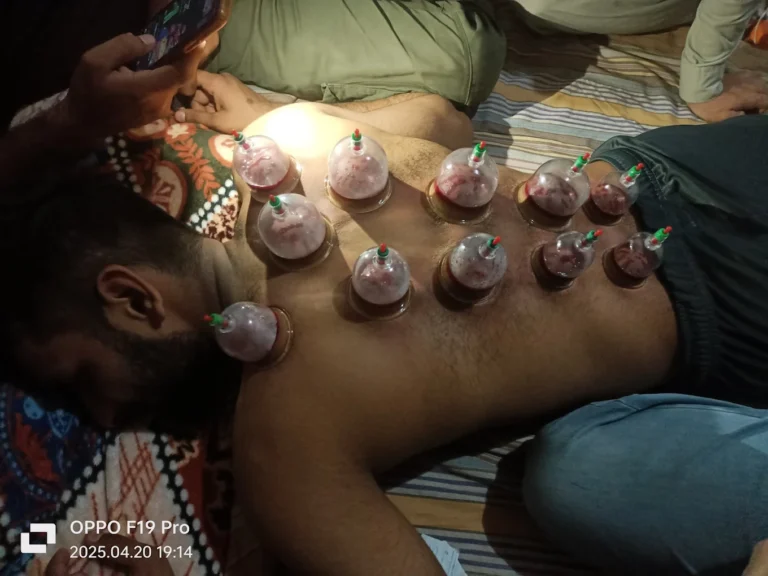
For some patients, gentle heat application combined with our cupping therapy (Hijama) service is used alongside physiotherapy to ease muscle tension around the shoulder and improve circulation before mobility exercises begin.
Guided Home Exercise Programs
Every patient is given a simple, personalized set of exercises to continue between sessions, because the daily five-to-ten-minute habit often matters more for long-term recovery than the sessions themselves.
How Long Does Recovery Take?
This varies a lot from person to person, depending on how early treatment starts and how consistently the exercises are followed. Many patients notice meaningful improvement in pain within four to six weeks of starting physiotherapy, while full range of motion can take several months to restore. Diabetic patients and those who delay treatment often take longer, which is one more reason to start physiotherapy as soon as stiffness is noticed rather than waiting for it to “go away on its own.”
Simple Exercises You Can Start Today
These are gentle enough to try at home, though they work best when guided and progressed by a physiotherapist based on your specific stage:
- Pendulum stretch: Lean forward slightly, let the affected arm hang, and gently swing it in small circles
- Towel stretch: Hold a towel behind your back with both hands and gently pull upward with the unaffected arm
- Finger walk: Face a wall, walk your fingers up it slowly to shoulder height, then lower slowly
- Cross-body reach: Use your other hand to gently lift the affected arm across your chest
A word of caution: pushing too hard, too soon can aggravate a frozen shoulder rather than help it. The NHS advises building up movement gradually and stopping any exercise that causes sharp pain, which is exactly why a supervised program tends to outperform guesswork.
When to See a Physiotherapist in Karachi
It’s worth booking an assessment if you notice shoulder pain that’s lasted more than two to three weeks, stiffness that’s clearly getting worse rather than better, or difficulty with basic tasks like reaching overhead or behind your back. Early intervention almost always leads to a shorter, more comfortable recovery.
Why Choose Dr. Aleem Physiotherapy Home Service
Dr. Aleem’s team has spent years treating musculoskeletal conditions across Karachi, and frozen shoulder is a condition we see and manage regularly. Every treatment plan is built around your specific stage of recovery, home environment, and daily routine, rather than a one-size-fits-all protocol.
To see the full scope of conditions we treat — from post-surgical recovery to sports injuries and geriatric care — take a look at our in-home physiotherapy services page. You can also read more about our approach on the About Dr. Aleem Physiotherapy Home Service page.
If you’re recovering from a recent operation alongside shoulder stiffness, our earlier article on post-surgery physiotherapy at home may also be useful reading.
Frequently Asked Questions
Can frozen shoulder be treated without surgery?
Yes. The large majority of frozen shoulder cases improve with physiotherapy, stretching, and pain management, without any need for surgical intervention.
Is frozen shoulder physiotherapy painful?
Some discomfort is normal, especially during the frozen stage, but a properly guided session should never involve sharp or lasting pain. Techniques are adjusted to your tolerance at every visit.
Does home physiotherapy work as well as clinic-based treatment?
For frozen shoulder specifically, home physiotherapy often works just as well, and sometimes better, because consistency and real-life movement practice matter more than the setting itself.
Book Your Home Physiotherapy Session Today
A frozen shoulder rarely improves on its own, and the longer it’s left untreated, the longer recovery tends to take. If shoulder pain and stiffness are getting in the way of your day, Dr. Aleem Physiotherapy Home Service can bring qualified, experienced care straight to your door anywhere in Karachi. Contact us today to book an assessment and take the first step toward moving freely again.
One Comment